
The Complete Guide to Vitamin B12: Science, Symptoms, and Plant-Based Solutions
Have you been feeling constantly exhausted, even after a full night's sleep? Experiencing mysterious brain fog, tingling sensations in your hands or feet, or unexplained mood swings? You aren’t alone.
Despite needing only a tiny fraction of a milligram each day, over 47% of the population is Vitamin B12 deficient, with nearly 74% falling into borderline deficient ranges. Even more surprising? This deficiency affects omnivores and vegetarians alike.
In this guide, we dive deep into the fascinating evolutionary science behind Vitamin B12, why modern gut health makes absorption so difficult, and how you can naturally optimize your B12 levels—even on a 100% plant-based or vegetarian diet.
1. The Surprising Science: Earth, Cobalt, and Evolutionary History
To understand why your body needs Vitamin B12, you have to look billions of years into the past—and far out into the cosmos.
The Cobalt Connection
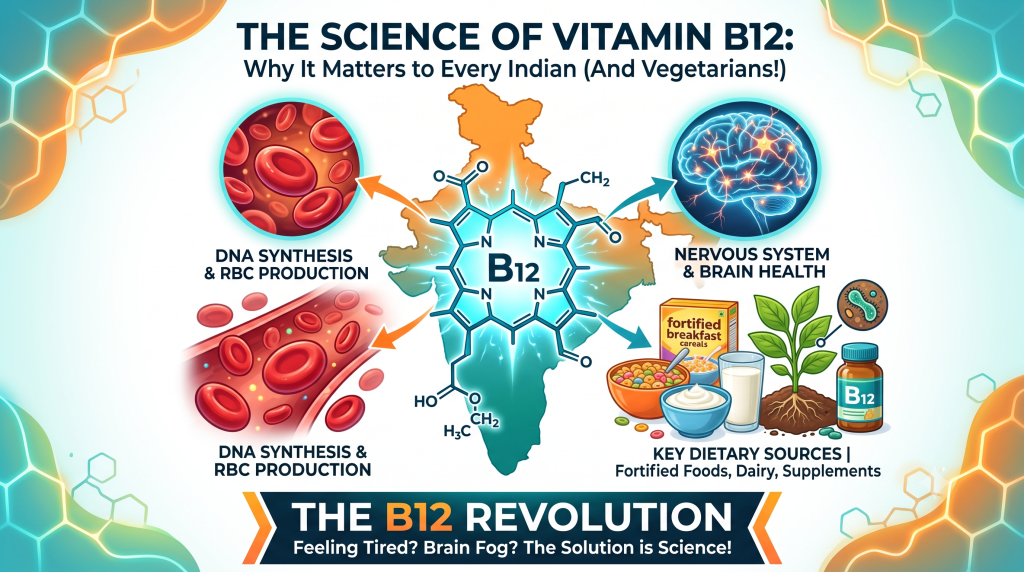
Vitamin B12 is chemically known as cobalamin. At the center of every single B12 molecule sits an atom of cobalt—a rare metal formed during cosmic supernova explosions. Just as cobalt provides the thermal stability required to keep modern lithium-ion batteries from catching fire, it plays a vital structural role inside living cells.
Cobalt acts as an essential cofactor for enzymes that drive fundamental biological processes:
- DNA and RNA Synthesis: Critical for generating every new cell in your body.
- Red Blood Cell Production: Ensures oxygen is efficiently delivered through your bloodstream.
- Nervous System Maintenance: Keeps your central nervous system and brain functioning smoothly.
- Fatty Acid & Amino Acid Metabolism: Converts nutrients directly into usable cellular energy.
Why Can’t Humans (or Animals) Make B12?
Around 2.7 billion years ago, early single-celled organisms faced an evolutionary crossroad. Synthesizing Vitamin B12 requires a grueling 30-step chemical process that consumes vast amounts of cellular energy.
Instead of spending energy to produce B12 internally, ancient biological ancestors evolved to simply consume other micro-organisms that already contained it. Over millions of years, animals—including humans—lost the biological capability to manufacture B12 directly.
Plants, on the other hand, evolved a completely different biochemical pathway. Because plants do not rely on cobalt or B12 for DNA and protein synthesis, raw plant foods do not naturally produce or contain Vitamin B12.
2. Recognizing the Signs: Common Symptoms of B12 Deficiency
Because B12 is crucial for creating red blood cells and maintaining nerve health, a deficiency starves your tissues of oxygen and disrupts neural signaling.
Key Warning Signs to Watch For:
- Unrelenting Fatigue & Muscle Weakness: Feeling drained even after resting.
- Neurological Disturbances: "Pins and needles" or tingling sensations in the fingers and toes.
- Brain Fog & Cognitive Decline: Memory gaps, difficulty focusing, and poor concentration.
- Mood Swings & Anxiety: Heightened irritability, depressive tendencies, or mood instability.
- Physical Markers: Pale or slightly yellow-tinged skin, recurrent mouth ulcers, and dizziness.
Did You Know? The human liver can store a 3 to 5-year supply of Vitamin B12. Because these stores deplete slowly, symptoms often take 1 to 2 years to manifest after your intake or absorption drops.
3. The Core Problem: Is It a Lack of B12, or Poor Absorption?
A common myth is that B12 deficiency only happens if you don't eat meat. However, clinical observations reveal that many non-vegetarians are also severely B12 deficient.
While intake matters, the root cause for millions of people is impaired gut absorption.
Why Modern Guts Fail to Absorb B12
In order to absorb Vitamin B12 from food, your stomach must produce adequate stomach acid and a protein called Intrinsic Factor. Modern lifestyle factors frequently disrupt this mechanism:
- Compromised Gut Health: Chronic indigestion, bloating, gas, and leaky gut prevent proper nutrient uptake.
- Excess Stress & Poor Sleep: Disrupts stomach acid production and digestive enzyme activity.
- Ultra-Processed Foods: Eradicate beneficial gut microflora required for optimal digestion.
- Over-Sanitization: Historically, humans consumed trace B12 from natural soil microbes on unwashed produce. Modern farming chemicals and thorough washing remove these bacteria entirely.
4. How Much Vitamin B12 Do You Actually Need?
The standard recommended daily allowance (RDA) for an average adult is surprisingly tiny:
(Pregnant and lactating mothers require slightly more, around 2.6–2.8 mcg daily).
5. Dietary Sources: Animal, Dairy, and Fermented Foods
| Food Category | Examples | B12 Density & Practical Reality |
|---|---|---|
| Top Tier (Animal) | Beef, Mutton, Pork Liver, Clams, Oysters | Extremely High. A single serving of liver far exceeds daily requirements. |
| Moderate Tier (Dairy) | Whole Milk, Curd (Yogurt), Paneer, Eggs | Moderate. 1 cup of whole milk provides ~50% RDA. 1 bowl of curd provides ~48% RDA. |
| Low Tier (Poultry) | Chicken Breast, Toned Milk | Low. Requires consuming unrealistic amounts (~1 kg chicken) daily to meet targets. |
| Fermented Plant Foods | Ambali (Millet Porridge), Kanji, Idli/Dosa Batter | Variable / Indirect. Restores beneficial gut flora to enhance internal synthesis and absorption. |
The Power of Dairy for Vegetarians
Studies show that the human body often absorbs B12 from dairy products more efficiently than from meat or eggs. Consuming one glass of fresh whole milk and one bowl of curd daily can cover nearly 100% of your daily B12 needs while delivering natural probiotics to heal your gut.
6. Top Natural & Plant-Based Solutions for Vegetarians and Vegans
If you follow a strict vegetarian or vegan diet, relying solely on unfortified plant foods will leave you at risk. However, you can maintain healthy levels naturally using these strategies:
1. Traditional Fermented Millet Porridge (Ambali)
Fermenting grains introduces beneficial bacterial strains that nourish your microbiome. Cook millets (such as Foxtail, Kodo, or Ragi), place them in a traditional clay pot with water, and let them ferment overnight (8–12 hours). Add fresh curd or buttermilk right before serving in the morning.
2. Unfortified Nutritional Yeast
Nutritional yeast delivers a savory, cheesy flavor alongside a robust B-vitamin profile. Just 1 tablespoon yields roughly 40% of your daily B12 requirement plus 2 grams of complete protein.
3. Wheatgrass Juice
Wheatgrass is a nutrient-dense superfood packed with B-complex vitamins. Mix 30 ml of wheatgrass juice with equal parts water and consume 30 minutes before breakfast.
4. Moringa Leaf Powder
Mix 1 teaspoon of moringa powder into warm water, or blend it directly into curries, dals, doughs, and smoothies for an easy antioxidant and B-vitamin boost.
5. Whole-Food Plant-Based B12 Supplements
When dietary adjustments aren't enough, opt for clean, plant-derived B12 capsules made from whole foods and herbal extracts. Take water-soluble B12 supplements immediately after a main meal for maximum bio-availability.
7. Actionable Summary: Revitalize Your B12 Levels
- Test First: Get a standard Vitamin B12 blood test. Target a healthy range between 200 pg/ml and 950 pg/ml.
- Heal Your Gut: Incorporate probiotic-rich foods like curd, buttermilk, and traditional fermented foods (Ambali, Kanji) to repair stomach lining and digestive function.
- Optimize Your Diet: Include whole milk, paneer, and unfortified nutritional yeast regularly.
- Supplement Wisely: If your levels are below 150 pg/ml, use a quality plant-based supplement or consult your physician for targeted guidance.