
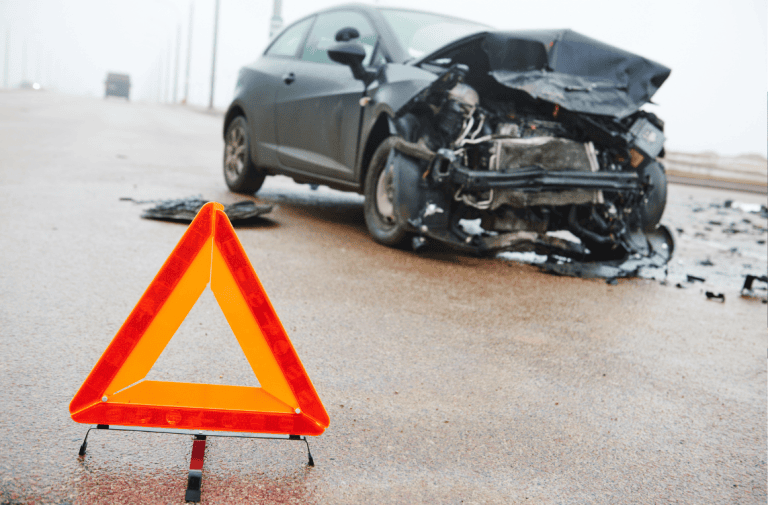
Is ADAS Safe and Useful for Driving in India? (The Ultimate 2026 Guide)
Advanced Driver Assistance Systems (ADAS) have shifted from luxury car gimmicks to mainstream necessity across Indian roads. From compact sedans under ₹10 Lakh to full-size electric and diesel SUVs, almost every major automaker in India now promotes Level 1 and Level 2 ADAS capabilities.
However, a pressing question remains for most buyers: Is ADAS actually safe, practical, and effective in chaotic Indian traffic conditions?
In this ultimate guide, we unpack how ADAS works in real-world Indian conditions, break down its hardware and safety features, analyze real-world test results, and list the most affordable ADAS-equipped cars available today.
1. What is ADAS and How Does It Work?
ADAS (Advanced Driver Assistance System) refers to a suite of electronic safety and assistance technologies designed to reduce human error, prevent collisions, and assist the driver with steering, braking, and speed management.
                  ┌─────────────────────────────────────┐
                  │          ADAS Fusion Center         │
                  └──────────────────┬──────────────────┘
                                     │
           ┌─────────────────────────┼─────────────────────────┐
           ▼                         ▼                         ▼
   ┌───────────────┐         ┌───────────────┐         ┌───────────────┐
   │ Front Camera  │         │  Front Radar  │         │ Corner Radars │
   │ (Visuals/AI)  │         │  (Distances)  │         │(Blind Spots)  │
   └───────────────┘         └───────────────┘         └───────────────┘
The Technology Behind ADAS: Camera vs. Radar
Modern ADAS relies on a Camera-Radar Fusion System working in tandem:
- Optical Cameras: Mounted behind the front windshield, cameras act as the visual "eyes" of the vehicle. They identify lane markings, classify obstacles (pedestrians, cars, cyclists), and read traffic signs.
- Radars: Mounted in the front grille/bumper and rear corners, long-range radio wave sensors calculate object distance, relative speed, and time-to-collision (TTC). Unlike cameras, radar can penetrate heavy rain, dust, and fog.
2. Explaining Autonomous Driving Levels (Level 0 to Level 5)
While automakers market Level 1, Level 2, or "Level 2.5" systems, knowing the actual difference between these standard automotive safety categories is vital:
  LEVEL 0        LEVEL 1        LEVEL 2        LEVEL 3        LEVEL 4        LEVEL 5
 ┌────────┐     ┌────────┐     ┌────────┐     ┌────────┐     ┌────────┐     ┌────────┐
 │ No Auto│     │ Driver │     │ Partial│     │Condit. │     │ High   │     │ Full   │
 │Warnings│     │ Assist │     │ Autom. │     │ Autom. │     │ Autom. │     │ Autom. │
 └────────┘     └────────┘     └────────┘     └────────┘     └────────┘     └────────┘
  Sensors        1 Action       Brake +        Hands-off      Geofenced      Everywhere
   Only          (Brake OR      Steer          in defined     Autonomous      No Wheel
                  Steer)        Together        zones           Taxi          Needed
- Level 0 (No Automation): The system provides warnings only (e.g., standard ultrasonic parking sensors). It cannot take physical control of the car.
- Level 1 (Driver Assistance): The car manages one automated action at a time—either maintaining distance via adaptive cruise control OR keeping the car in a lane via steering corrections.
- Level 2 (Partial Automation): The system simultaneously controls both steering and speed/braking (e.g., combining Lane Keeping Assist with Adaptive Cruise Control). The driver must keep their hands on the wheel and maintain attention.
- Level 2.5 (Industry Marketing Term): Not an official SAE classification, but widely used by brands like Mahindra to indicate enhanced Level 2 setups featuring additional side-looking radars or automated evasive steering capability.
- Level 3 (Conditional Automation): The car drives autonomously under specific conditions (like marked highways). Driver intervention is only needed when prompted by the system.
- Level 4 (High Automation): Full self-driving capability within mapped, geofenced areas (e.g., robotaxis).
- Level 5 (Full Automation): Complete autonomy anywhere on Earth, with no steering wheel or human intervention required.
3. Key ADAS Features Decoded: City vs. Highway Utilities
| Feature Name | Primary Environment | How It Keeps You Safe |
|---|---|---|
| Rear Cross-Traffic Alert & Assist | City / Parking | Detects cross-traffic behind you while reversing out of blind spots; triggers alerts and applies emergency brakes. |
| Safe Exit Warning | City / Parking | Prevents passengers from opening doors into oncoming two-wheelers, cyclists, or passing traffic. |
| Blind Spot Collision Warning & Assist | City & Highway | Displays mirror indicators for hidden vehicles in adjacent lanes and provides counter-steering or braking if you signal a lane change. |
| Lane Departure Warning & Keep Assist | Highways | Gives audio/tactile alerts when drifting out of a lane and gently steers the car back into the lane center. |
| Forward Collision Warning (FCW) & AEB | City & Highway | Scans for stopped or slowing vehicles/pedestrians ahead, sounding warnings and automatically braking to mitigate or avoid impact. |
| Smart/Adaptive Cruise Control | Expressways | Maintains a set speed while dynamically adjusting distance from the vehicle ahead, including full stop-and-go functionality in traffic. |
| Leading Vehicle Departure Alert | City Signals | Alerts distracted drivers at traffic lights when the vehicle ahead has started moving. |
4. Real-World Testing: Automatic Emergency Braking (AEB) in India
Real-world evaluation reveals distinct differences in how leading Indian OEMs tune their Autonomous Emergency Braking (AEB) systems when reacting to jaywalking pedestrians:
1. Mahindra (Rank #1)
- Performance: Exceptional braking consistency both day and night with minimal skidding or harsh pitch.
- Standout Feature: Offers customized perception profiles capable of recognizing unique Indian road conditions, including isolated cows and barricades under clear visibility guidelines.
2. Hyundai (Rank #2)
- Performance: High consistency with precise late-stage calibration.
- Real-World Calibration: By braking closer to the obstacle without triggering false positives early, Hyundai's AEB setup minimizes unexpected abrupt stops during tight city driving.
3. Kia (Rank #3)
- Performance: Extremely safe and reliable, though tuned conservatively.
- Behavior: Applies aggressive braking intervention early, resulting in noticeable weight transfer and nose-dive.
4. Tata (Rank #4)
- Performance: Mixed daytime performance with improved night consistency due to high-power LED throw.
- Behavior: Inconsistent pedestrian detection speed thresholds can sometimes lead to late interventions.
Disqualified / Car-to-Car Only: Maruti Suzuki & Toyota
- Behavior: Systems like Maruti’s Dual Sensor Braking Support and Toyota’s Pre-Collision System on select mass-market models are engineered primarily for Car-to-Car mitigation. They deliberately bypass small pedestrian tracking to avoid frequent false alarms in dense urban Indian traffic.
5. Debunking Critical ADAS Myths
Myth 1: AEB will completely stop your car at any speed.
Reality: Physics dictates stopping distances. Most user manuals specify that AEB is engineered to operate up to 80–85 km/h, reducing overall vehicle speed by 30–50 km/h at best. At high speeds, AEB transitions from collision avoidance to impact mitigation.
Myth 2: ADAS works completely in total darkness.
Reality: Camera-radar fusion relies on optical imaging to classify human limbs and pedestrians. If your headlights are off or visibility drops to zero, the camera goes blind, disabling AEB pedestrian interventions even if the radar detects an object ahead.
Myth 3: Recalibration isn't needed after minor bodywork.
Reality: Replacing a windshield, swapping bumpers carrying radar modules, or changing overall wheel sizes alters the vehicle’s height and sensor geometry. Millimeter-accurate static or dynamic recalibration at a certified service center is essential to ensure sensor accuracy.
6. Top 10 Most Affordable ADAS Cars in India
┌─────────────────────────────────────────────────────────────────────────┐
│                    AFFORDABLE ADAS CARS IN INDIA                        │
├──────────────────────────────────┬──────────────────────────────────────┤
│ 10. Hyundai Creta                │ ₹15.69 L - ₹20.00 L ex-showroom      │
│ 9.  Hyundai Venue                │ ₹14.56 L - ₹15.69 L ex-showroom      │
│ 8.  Kia Seltos                   │ ₹15.29 L - ₹15.93 L ex-showroom      │
│ 7.  MG Astor                     │ ₹15.60 L ex-showroom (Savvy Pro)     │
│ 6.  Honda Elevate                │ ₹14.80 L - ₹16.15 L ex-showroom      │
│ 5.  Tata Nexon                   │ ₹13.53 L - ₹13.81 L ex-showroom      │
│ 4.  Kia Sonet                    │ ₹11.50 L - ₹14.00 L ex-showroom      │
│ 3.  Honda City                   │ ₹12.69 L - ₹15.48 L ex-showroom      │
│ 2.  Mahindra XUV 3XO             │ ₹11.50 L - ₹14.39 L ex-showroom      │
│ 1.  Honda Amaze (Most Affordable)│ ₹ 9.40 L - ₹10.24 L ex-showroom      │
└──────────────────────────────────┴──────────────────────────────────────┘
Below is a detailed breakdown of the top 10 most accessible ADAS-equipped vehicles available in India, ranked from premium mass-market offerings down to the most budget-friendly option:
10. Hyundai Creta
- Price Range: ₹15.69 Lakh – ₹20.00 Lakh (Ex-Showroom)
- ADAS Spec: Level 2 ADAS (SX Tech, King Edition)
- Key Highlights: Packed with Smart Cruise Control, Blind Spot Assist, and Rear Cross-Traffic Assist. Matches well with its 1.5L Petrol, Turbo-Petrol, and Diesel powertrains.
9. Hyundai Venue
- Price Range: ₹14.56 Lakh – ₹15.69 Lakh (Ex-Showroom)
- ADAS Spec: Level 2 ADAS (Top HX10 Variant)
- Key Highlights: Upgraded from the previous generation's Level 1 system, bringing comprehensive Level 2 active safety capabilities to the compact SUV segment.
8. Kia Seltos
- Price Range: ₹15.29 Lakh – ₹15.93 Lakh (Ex-Showroom)
- ADAS Spec: Level 2 ADAS (HTX+ / GTX+ / X-Line)
- Key Highlights: Feature-rich suite offering comprehensive active safety measures paired with smooth DCT and Torque Converter automatic gearboxes.
7. MG Astor
- Price Range: Starts at ₹15.60 Lakh (Ex-Showroom)
- ADAS Spec: Level 2 ADAS (Savvy Pro Trim)
- Key Highlights: Early pioneer of mid-size SUV ADAS features, incorporating mid-range radar-assisted speed management and lane control.
6. Honda Elevate
- Price Range: ₹14.80 Lakh – ₹16.15 Lakh (Ex-Showroom)
- ADAS Spec: Honda Sensing (ZX Trim)
- Key Highlights: Leverages a high-definition optical camera system to deliver precise Lane Keep Assist and Forward Collision Mitigation without complex multi-radar hardware.
5. Tata Nexon
- Price Range: ₹13.53 Lakh – ₹13.81 Lakh (Ex-Showroom)
- ADAS Spec: Level 2 ADAS (Fearless+ S & Red Dark Editions)
- Key Highlights: Combines 5-star structural safety credentials with modern active safety enhancements, available specifically with the 1.2L Turbo-Petrol DCT.
4. Kia Sonet
- Price Range: ₹11.50 Lakh – ₹14.00 Lakh (Ex-Showroom)
- ADAS Spec: Level 2 ADAS (GTX+ & X-Line)
- Key Highlights: High-value package introducing camera-based driver support and front collision alerts to sub-4-meter crossover buyers.
3. Honda City
- Price Range: ₹12.69 Lakh – ₹15.48 Lakh (Ex-Showroom)
- ADAS Spec: Honda Sensing (Standard across VX & ZX trims)
- Key Highlights: One of the most accessible mid-size sedans with active safety features, offering ADAS compatibility across both manual and CVT gearboxes.
2. Mahindra XUV 3XO
- Price Range: ₹11.50 Lakh – ₹14.39 Lakh (Ex-Showroom)
- ADAS Spec: Level 2 ADAS (AX5L & AX7L Trims)
- Key Highlights: Outstanding entry point for radar-plus-camera Level 2 integration, offering 130 HP Turbo-Petrol performance alongside auto-braking and adaptive cruise control.
1. Honda Amaze (The Most Affordable ADAS Car in India)
- Price Range: ₹9.40 Lakh – ₹10.24 Lakh (Ex-Showroom)
- ADAS Spec: Honda Sensing Camera System (ZX Trim)
- Key Highlights: The only sub-4-meter sedan in India under ₹10 Lakh to offer active safety technology, making ADAS accessible without requiring a massive budget.
Final Verdict: Is ADAS Worth It in India?
Yes—provided you treat it as an active assistant rather than an autopilot.
While dense traffic and unpredictable road conditions can trigger occasional false alarms, specific features like Rear Cross-Traffic Assist, Blind Spot Monitoring, and Safe Exit Warnings prevent daily urban bumps and scrapes. On marked national highways and expressways, Lane Keep Assist and Adaptive Cruise Control significantly lower driver fatigue.
As active safety technologies continue to adapt to local driving conditions, ADAS is rapidly evolving from a luxury add-on into an essential everyday safety layer for modern Indian motorists.